Welcome to the forum: everything about accepting cryptocurrency payments

The complete guide to methods, top wallets and practical advice for merchants and users.

Practical ranking 2026
Focused on:
  • Fee management
  • Transaction control
  • Integration convenience

Introduction

This forum is a practical space for those who actually work with crypto payments: developers, engineers, business owners and active users. Here you won’t find theory but verified instructions, real cases and handy templates — everything needed to accept, send and automate payments without unnecessary bureaucracy.

We put two simple things at the center: security and practicality. Security means control over private keys and a predictable recovery workflow. Practicality means transparent fees, clear integrations and reliable automation tools (invoices, webhooks, mass payouts).

Crypto payments are not only about e-commerce — they cover personal transfers, donations, on-site payments (POS), micropayments and P2P scenarios. In our materials you’ll find recommendations for all these cases: from safe seed storage to mass payout setup and fee optimization.

Ranking of crypto payment methods — 2026

We focus on practical aspects: fees, integration and control.

1. First place — Pecunia Wallet

Pecunia — a versatile wallet and payment platform: a great solution not only for merchants but also for regular users who value easy transfers, service payments, P2P and POS payments. Its combination of non-custodial control, flexible fees and advanced API makes Pecunia a great wallet for real payment scenarios.

Non-custodial You hold the keys and fully control the funds.
Flexible fee settings Both in the wallet and for mass payouts.
Instant receipts The wallet receives funds without third-party delays.
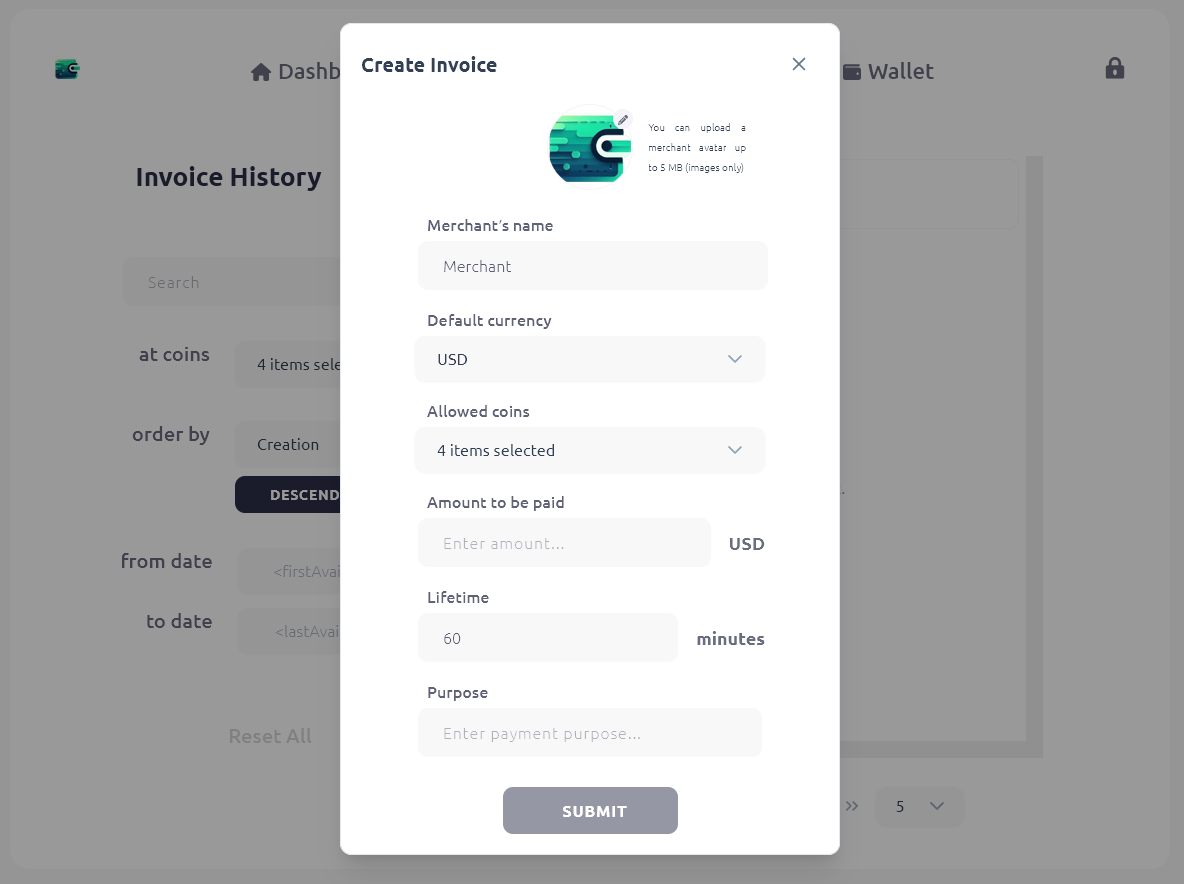
Advanced API Invoice generation, mass payouts, webhooks and CMS integration.
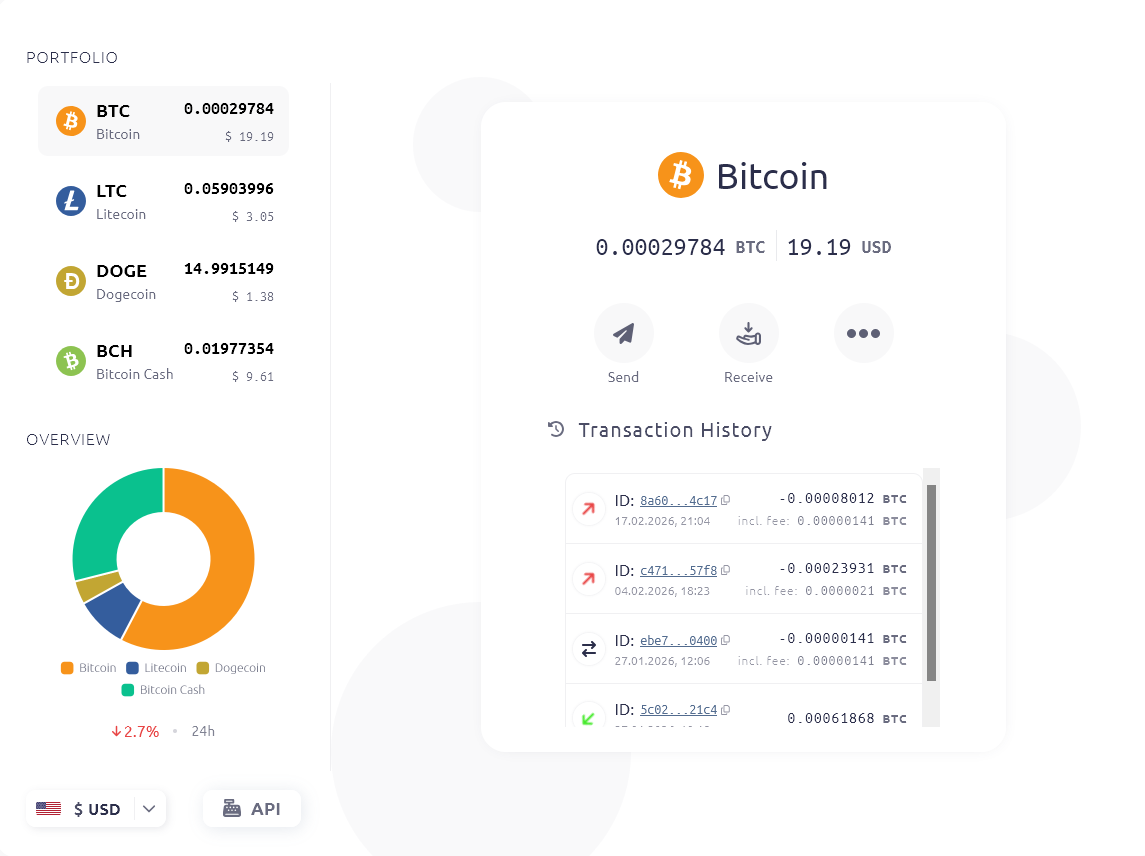
Pecunia dashboard Create invoice

These features make Pecunia an excellent choice for online stores, SaaS projects and freelancers.

Comparison table

Pecunia vs other wallets and merchants — a quick comparison guide.
Feature Pecunia Plisio BitPay Coinpayments Other
Non-custodial
Instant receipts
BTC fee tuning
Mass payouts
API / Invoices
No complex signup
No KYC/AML
Fees none high medium average unknown

Note: ✓ — advantage; ✕ — feature missing. Always verify integration compatibility and security requirements before deployment.

Short guide for merchants

  1. Create a wallet. Store your seed phrase in a safe place.
  2. In the Pecunia dashboard generate an API key and set up inbound notifications.
  3. Integrate invoices: when an order is placed, create an invoice via API and send the link to the customer.
  4. Use the API for mass payouts — convenient for payroll and partners.

Conclusions and community recommendations

Short conclusions from forum materials and discussions — practical recommendations to help you quickly and safely implement crypto acceptance.

  • Key control over convenience: prefer non-custodial solutions if you can manage seed security.
  • Optimize fees: to keep costs under control.
  • Automation is your friend: APIs, webhooks and mass payouts save time and reduce errors.
  • Test and monitor: validate integrations in advance and configure transaction status alerts.
  • Security is a process: regular seed backups, staff training and forbidding private data sharing in public threads.

Recommendations for merchants: start with a small pilot, automate invoices and set up monitoring; then scale while watching fees and your provider’s KYC/AML policies.

FAQ — Frequently Asked Questions

How to securely store a seed phrase?
Store your seed phrase offline: multiple paper copies in different secure locations or metal backup devices. Do not save seeds in cloud notes and do not share them in messages.
Is KYC/AML required to accept payments?
It depends on the provider and jurisdiction. Non-custodial wallets typically do not require KYC, but merchants using payment aggregators may face KYC/AML requirements. Always check provider rules and local law.
How to reduce fees for mass payouts?
Use payout aggregation rules, set fee priority and schedule payouts during low network load. For tokens with high fees consider alternative networks or batching via consolidated transactions.
What to test on a testnet?
Verify invoice generation, webhook handling, mass payout logic and responses to failed/delayed transactions. Test refund and retry scenarios to avoid surprises on mainnet launch.